

Tomáš Uhorčík – the outlaw captain who made Jánošík a highwayman
Without him there would probably have been no outlaw Jánošík. Tomáš Uhorčík brought the young man from Terchová into his band, went to ground in Klenovec as “Martin Mravec” – and died on the wheel a few weeks after him.
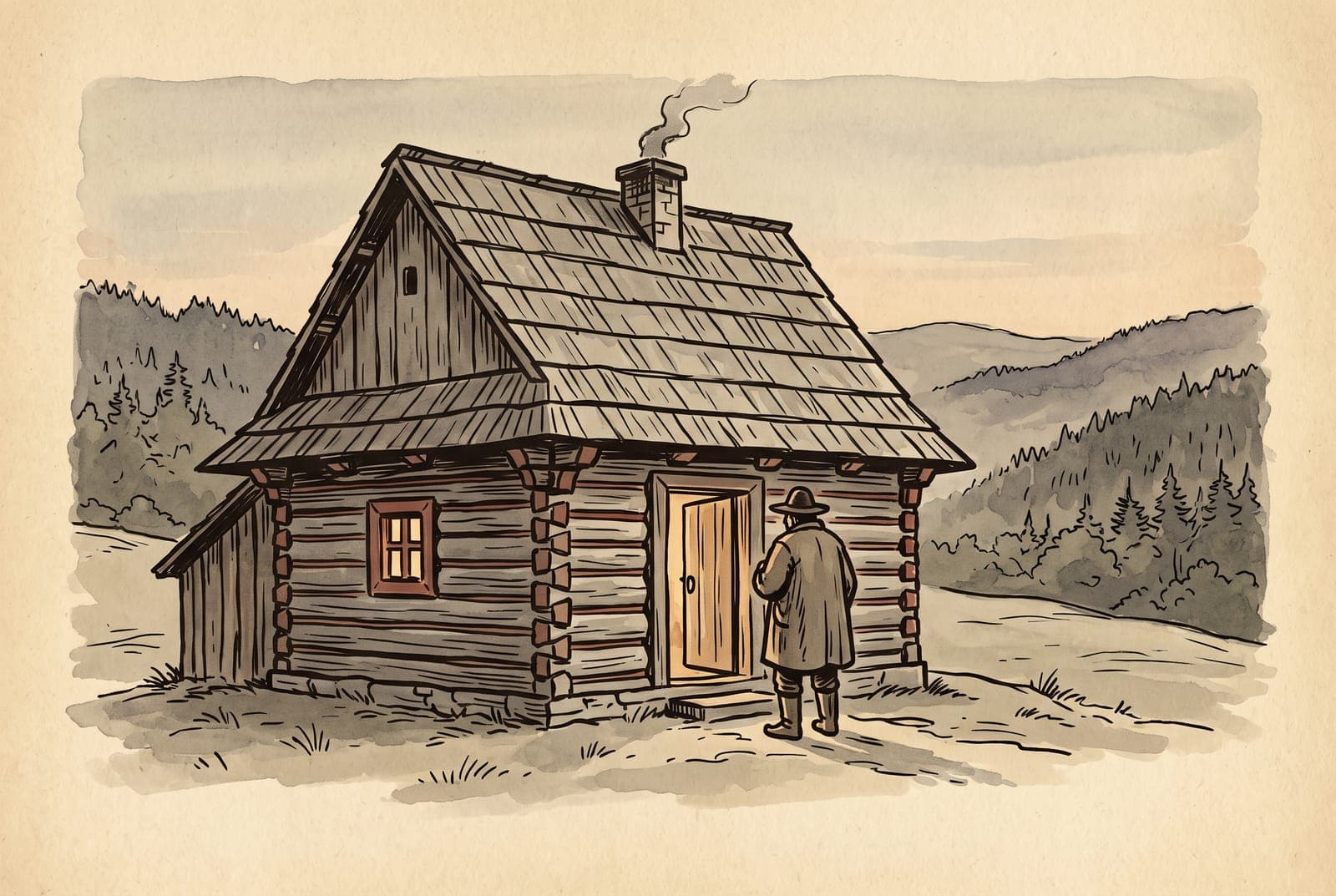
Tomáš Uhorčík (c. 1674 – 1713), alias “Martin Mravec”, was the older outlaw captain from Predmier near Turzovka who took Juraj Jánošík into his band in 1711. The two had met at Bytča, where Uhorčík was a prisoner and Jánošík a guard. When Uhorčík settled in Klenovec under a false name, Jánošík took over the band; in April 1713, after a trial before the Liptov county court, Uhorčík was broken on the wheel1567.
He turns up in almost every account of Jánošík – and almost always on the margins: the man who opens the door to the outlaw’s life for the hero and then drops out of the story. Yet Uhorčík was already robbing when Jánošík was barely an adolescent. He founded the group that later bore Jánošík’s name, he recruited him, and in the end he shared his fate.
Origins: a Kysuce man from Predmier
Tomáš Uhorčík came from Predmier, a village that is now part of the town of Turzovka in north-western Slovakia37. The Kysuce region, on the border with Silesia and Moravia, then belonged to Trenčín County in the Kingdom of Hungary. The Slovak Wikipedia gives his year of birth as 1674; the historian Marián Liščák of the Kysuce Museum more cautiously writes “around 1674”13. No baptismal entry is cited, so the year is an approximation.
That made Uhorčík some fourteen years older than Jánošík, who was baptised at Varín on 25 January 16887 – an experienced man, not a contemporary.
His home region was no accidental starting point. The historian Ivan Mrva notes that Kysuce supplied a large part of Jánošík’s band; as late as 1740 the scholar Matej Bel called the village of Vysoká nad Kysucou a “bandit nest”6. Among the band members named by Jánošík and Uhorčík under interrogation were a Bartek from Predmier and an Adam Šušolka from Turzovka7.
A robber since 1703: war as a breeding ground
When exactly Uhorčík first took to robbery is not known to the day. The municipality of Klenovec says he robbed from 1703; Mrva gives “about 1704”26. Both dates fall in the early years of the Rákóczi uprising (1703–1711). Mrva describes how the eight-year kuruc war made banditry grow to “unprecedented dimensions”: peasants called up into the county regiments deserted and took to the forests6.
Bytča: the prisoner and his guard
At some point Uhorčík was caught and imprisoned in Bytča, in the former castle of the Thurzó family. After 1708 a young soldier in imperial service stood guard there: Juraj Jánošík, who had earlier fought for the kuruc insurgents57. According to the trial protocol, Jánošík rendered the prisoner small services7.
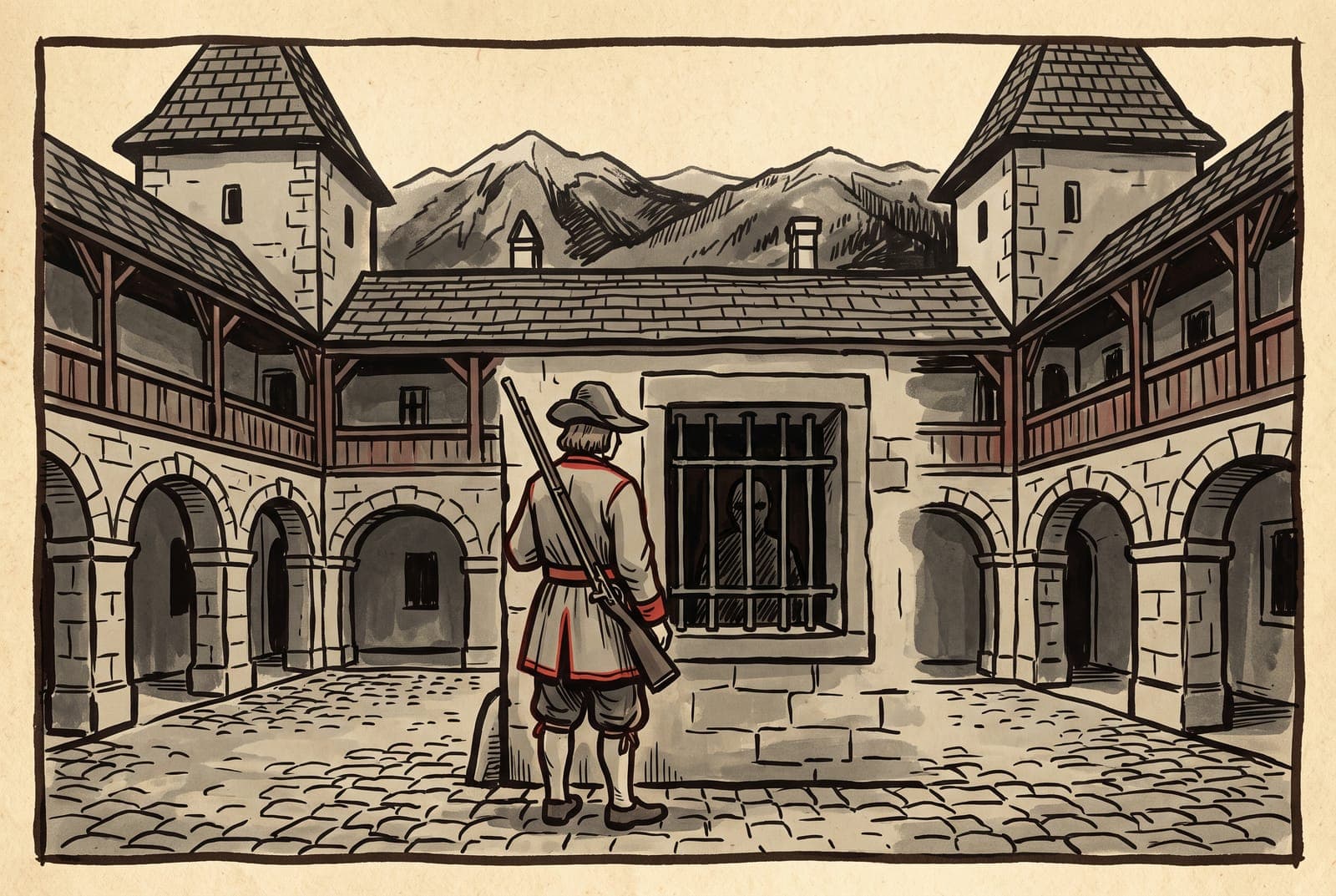
In 1710 Jánošík’s parents – most sources say his father – bought him out of the army57. In the same year Uhorčík got out of prison too. How he did so is one of the open questions of this story.
Disputed Did Jánošík help him escape? Marián Liščák of the Kysuce Museum and the English Wikipedia state that Jánošík helped Uhorčík escape in (late) autumn 1710110. The Slovak Wikipedia, drawing on Andrej Melicherčík, says instead that it is not known how Uhorčík escaped7. The historian Miroslav Nemec says only that Uhorčík got out of prison “the same year”5. Active help with an escape is therefore possible but unproven.
Recruitment in Terchová (1711)
In autumn 1711 Uhorčík sought Jánošík out in Terchová and won him over to his band. Around Michaelmas, 29 September 1711, Jánošík swore the outlaws’ oath; the first joint expedition went to Moravia, where they took linen cloth7. The wording of the oath has come down to us through Melicherčík:
“Prisahám večnému Bohu, Svätej Trojici, Panenke Márii a všetkým božím svätým, že svojich tovarišov nevyzradím, neoklamem a neopustím ani v šťastí ani v nešťastí. Tak mi Pánboh pomáhaj!” – “I swear to eternal God, the Holy Trinity, the Virgin Mary and all God’s saints that I shall not betray, deceive or abandon my companions in fortune or misfortune. So help me God!”7
As early as 5 October 1711 the band robbed Ján Šipoš, a burgher of Žilina, of cloth and linen. The goods were sold, and 70 zlatých from the proceeds were lent to one Stoliga7 – the man whose daughter Uhorčík was soon to marry.
Marriage and a new life as “Martin Mravec”
Before the winter of 1711 Uhorčík married the daughter of Stoliga, a shepherd from Jablunkov in Cieszyn Silesia57. He then moved far to the south, to Klenovec in what was then Malohont County, and settled there under the name Martin Mravec57. Leadership of the band passed to Jánošík, who now acted as its hajtman, or captain7.
Documented One man, two names. “Martin Mravec” is not a separate outlaw but Tomáš Uhorčík’s alias. The archivist Peter Vítek (State Archive at Bytča) treats both names as one person; the proceedings against him follow directly after Jánošík’s in the Liptov county protocol of 1710–171763.
Uhorčík did not vanish from the outlaw world altogether. Klenovec became a base to which Jánošík returned again and again. According to Uhorčík’s later testimony, Jánošík gave or lent people in Klenovec eight and ten gold coins respectively3. In the winter of 1712 Jánošík hid for three weeks with Ondrej Kovalčík in neighbouring Kokava78. How close-knit this network was is shown by a later verdict: on 24 May 1713 the manorial court of Teplička nad Váhom had Martin Hatala alias Bartoviech of Klenovec and Ján Mikulčík of Poland beheaded for associating with Jánošík and Uhorčík6.
First arrest: Hrachovo, autumn 1712
In autumn 1712 the double life began to crack. After a robbery of merchants from Banská Bystrica in Malohont County, Jánošík and “Mravec” were arrested in Klenovec and held in the manor house at Hrachovo, where the county conducted its proceedings72. The Slovak Wikipedia gives the date as 26 October 1712; the municipality of Klenovec and Liščák speak generally of October 1712321.
Both were released: they were able to show that they had not taken part in that robbery, and Pavol Láni, deputy head of Malohont County, intervened on their behalf. They are said to have thanked the “gentlemen of the county” with fox furs and cheeses78. Miroslav Nemec points out that letters of good character were issued “even for the innocence of Uhorčík and Jánošík” – an illustration of how little such testimonials were worth6.
Legend The escape from Hrachovo. In folk tradition – and still in some present-day accounts – Jánošík escapes from Hrachovo. The sources, however, speak of a release7.
The arrest in Klenovec and the trial
The second arrest was final. Liptov county haiduks seized Jánošík in Uhorčík’s house in Klenovec562. The Slovak Wikipedia, following Melicherčík and Antolová, mentions some 25 to 30 armed men under the nobleman Andreánsky, with the search organised from Liptov under Emerich Kubínyi7. Locally the spot is still called “Mravcov vŕšok”, Mravec’s hillock38.
When this happened is disputed: Nemec dates the arrest “around the turn of 1712/1713”, while the municipality of Klenovec and the historian Diana Duchoňová give “early March 1713”529. As early as 1929 Ivan Houdek observed that the court records make no mention at all of how and where he was caught6.
On 16 and 17 March 1713 Jánošík stood before the county court in Svätý Mikuláš, today’s Liptovský Mikuláš. What he said about his old captain is striking: Uhorčík, he claimed, had died in the Kremnica Mountains7. In this way he protected “Mravec”, who was at that moment held in the same custody7. Whether out of loyalty to his oath or from calculation, no source says.
The cover did not hold. Uhorčík’s true identity came to light and he himself was brought before the Liptov court65. Exactly how he was unmasked – by witnesses, fellow prisoners or papers from Trenčín County – is not set out in detail in the accounts checked for this site. What is certain is where the record survives: the proceedings against him are entered in the Protocollum I. Comitatus Liptoviensis 1710–1717 on pages 568–573 and 577–578, directly after Jánošík’s case on pages 563–567. The volume is held today by the State Archive in Žilina, based in Bytča6.
Sentence and execution: the wheel
According to Liščák, proceedings against Uhorčík began on 19 April 1713; two days later, on 21 April 1713, he was executed1. The Slovak Wikipedia also gives 21 April3. The sentence was breaking on the wheel. The Czech Wikipedia specifies that he was broken “from the neck” – the form that meant a quick death43.
The punishment followed Hungarian law. Werbőczy’s Tripartitum prescribed the gallows for thieves but the stake or the wheel for robbers: “fures scilicet patibulo; praedones vero palo, vel rota”6. Jánošík had been sentenced to hang from a hook, Uhorčík to the wheel – two variants of the same hard line against banditry.
Disputed Where did Uhorčík die? The Slovak Wikipedia places the execution in Klenovec, in front of his own house on Mravcov vŕšok3. The Czech Wikipedia gives Liptovský Mikuláš as the place of death4. In favour of Liptov is the fact that the Liptov county court tried him6; in favour of Klenovec is local tradition, which links the place of execution with his house. No execution record that would settle the question has been traced in the sources checked.
Uhorčík and Jánošík at a glance
| Tomáš Uhorčík | Juraj Jánošík | |
|---|---|---|
| Origin | Predmier (Turzovka), Kysuce3 | Terchová, baptised 25 Jan 1688 at Varín7 |
| Born | c. 167413 | c. January 16887 |
| Robbing since | c. 1703/170426 | autumn 17117 |
| Role | captain of the band until 17117 | captain from winter 17117 |
| Alias | “Martin Mravec”36 | – |
| Trial | Liptov, April 171316 | Liptov, 16–17 March 17137 |
| Punishment | broken on the wheel, 21 Apr 17131 | hook, 17 or 18 March 17137 |
In legend and film: the man in the shadows
Uhorčík lives on in folk poetry, but as one among many. Songs and tales name him – also in the form “Uherčík” – alongside Ilčík, Hunka, Surovec, Adamčík, Hrajnoha and Gajdošík as Jánošík’s companions11. Not all of these names belonged to Jánošík’s historical band. Of them, Uhorčík is the one whose role the court records document most clearly: he recruited Jánošík7.
Legend Decided by the valaška. One tradition has Jánošík winning leadership of the band in a contest with the valaška, the long-handled shepherd’s axe11. The records tell a more sober story: the old captain married, moved to Klenovec and left the band to the younger man57.
Literature and film, too, put Jánošík at the centre. The major screen versions – from the first Slovak feature film in 1921 through Martin Frič (1935) and Paľo Bielik (1963) to Agnieszka Holland and Kasia Adamik (2009) – all carry Jánošík’s name in the title12. How much space they give Uhorčík is not documented in the sources checked for this site. The balance, though, is plain: the founder of the band became a supporting character to his own recruit.
Historically, that is unfair. Uhorčík had been robbing for seven or eight years before Jánošík arrived; he fetched him from Terchová, gave him a refuge in Klenovec, and it was in his house that Jánošík’s outlaw career ended257. Without Tomáš Uhorčík there would probably have been no outlaw Jánošík – and very likely no folk hero either.
Frequently asked questions
Who was Tomáš Uhorčík?
Tomáš Uhorčík was an outlaw captain from Predmier (now Turzovka) in the Kysuce region, born around 1674. He led a band into which he took Juraj Jánošík in 1711, and afterwards lived in Klenovec under the alias “Martin Mravec”. In 1713 he was sentenced by the Liptov court and broken on the wheel.137
How did Jánošík and Uhorčík meet?
They met at Bytča castle, where Uhorčík was imprisoned and Jánošík served as a guard in the imperial army. According to the trial protocol, Jánošík rendered the prisoner small services. Whether he also helped him escape in 1710 is disputed.571
Who was Martin Mravec?
“Martin Mravec” was the alias under which Tomáš Uhorčík lived in Klenovec after marrying the daughter of Stoliga, a shepherd from Jablunkov. He was not a separate outlaw but the same person.367
When and how was Uhorčík executed?
According to the historian Marián Liščák, Uhorčík was broken on the wheel on 21 April 1713, two days after his proceedings began. He was broken “from the neck”, the form that meant a quick death. Whether the execution took place in Klenovec or in Liptovský Mikuláš is disputed.134
Sources
- Všetkým známy a predsa nepoznaný príbeh Tomáša Uhorčíka – Marián Liščák (Kysucké múzeum), mojeKysuce.sk [sk]
- Historické osobnosti – Obec Klenovec [sk]
- Tomáš Uhorčík – Wikipédia (sk) [sk]
- Tomáš Uhorčík – Wikipedie (cs) [cs]
- Bol Jánošík väznený v kaštieli Vranovo? (Historický časopis 70/1, s. 143–152) – Miroslav Nemec, Historický ústav SAV (2022) [sk]
- Zbojníctvo na Slovensku. Zborník z vedeckej konferencie, Liptovský Mikuláš 4. 11. 2013 – Miroslav Nemec, Peter Vítek (eds.), Spolok Slovákov v Poľsku (2014) [sk]
- Juraj Jánošík – Wikipédia (sk) [sk]
- Kokava nad Rimavicou: V rázovitej slovenskej obci kedysi slúžil Jánošík – rimava.sk [sk]
- Hrdina alebo zlodej? Jánošík lup chudobe nerozdával, tvrdia historici – noviny.sk (2018) [sk]
- Juraj Jánošík – Wikipedia (en)
- Jánošíkovská legenda na Slovensku (bakalářská práce) – Jana Hrajnohová, Univerzita Karlova (2010) [cs]
- jánošíkovská tradícia – Encyclopaedia Beliana, Encyklopedický ústav SAV [sk]
Transparency notice (Art. 50 EU AI Act): research and text were produced with the help of an AI language model and editorially checked against the sources listed. Illustrations are AI-generated and are not historical depictions.
This article is also available in Deutsch, Slovenčina
More on Janosik.de
Jánošík’s Outlaw Years 1711–1713: Raids, Band and Loot
Juraj Jánošík was an outlaw for barely eighteen months. What the court records reveal about his oath, raids, loot and helpers – told step by step.
Juraj Jánošík: Life, Trial and Legend of Slovakia's National Hero
A serf's son from Terchová, a soldier in two armies, an outlaw captain for little more than a year – and, after his execution in 1713, Slovakia's most famous hero. What the records really say about Juraj Jánošík.
Trial and Execution 1713 – Jánošík Before the Liptov County Court
Two days in March 1713 decided the fate of Juraj Jánošík. The Liptov County protocol survives – and tells a soberer story than the songs.