

Jánošík – Legend and Truth: How a Robber Became a National Hero
The historical Juraj Jánošík was the captain of a small outlaw band, sentenced in Liptovský Mikuláš in 1713. The folk hero who robbed the rich to give to the poor was made by songs, poets and ideologies – traced here motif by motif.
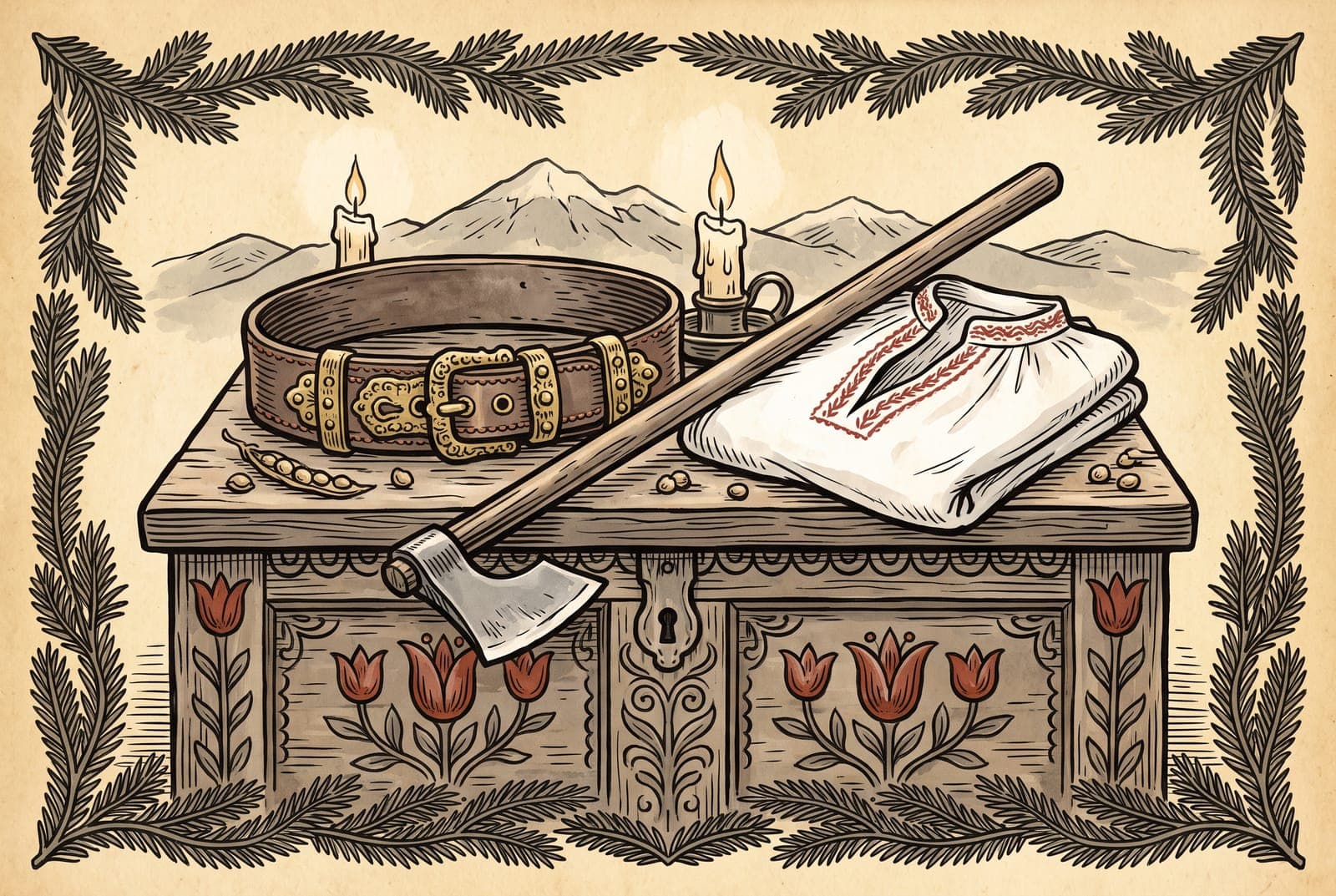
Juraj Jánošík (baptised in Varín in 1688, sentenced in Liptovský Mikuláš in 1713) was historically the captain of an outlaw band that mainly robbed merchants, nobles and travellers; no record shows that he took from the rich to give to the poor45. He became a national hero only through 18th-century folk songs, the poets of Slovak Romanticism and the political readings of the 20th century13. Almost every famous motif – the magic shirt, the peas, the dance at the gallows, the twelve companions – is folk-tale material; only the hook has a basis in the court records12.
Few figures in Central Europe have gathered so dense a web of stories. Anyone who grows up in Slovakia knows the line about the hook, the belt with its secret power and the old woman with her sack of peas long before they hear the words “trial record”. This article takes the legend seriously – as cultural heritage that has grown over three centuries – and sets it, motif by motif, beside what the sources actually say.
Two Jánošíks: the man in the records and the hero in the songs
The Jánošík of the archives is quickly sketched. Baptised on 25 January 1688 in the parish of Varín, to which Terchová belonged, he served in the Rákóczi wars and then as a guard at Bytča, where he met the imprisoned robber captain Tomáš Uhorčík4. From the autumn of 1711 he belonged to Uhorčík’s band and soon became its captain4. In March 1713 he stood before the county court of Liptov in Svätý Mikuláš, today’s Liptovský Mikuláš41.
The Jánošík of the songs, by contrast, is a giant of strength, invulnerable thanks to a magic belt, just to the poor, feared by the lords, betrayed by a friend and caught by a trick. He dies dancing, with a mocking word on his lips. This second Jánošík is not “false” – he belongs to a different genre. Drawing on Andrej Melicherčík and Jolanta Goszczyńska, Jana Hrajnohová describes a bundle of recurring motifs, some taken from the common stock of fairy tales, which attached themselves to Jánošík step by step2.
Motif 1: Robbing the rich, giving to the poor
What the legend says. Jánošík robs lords and wealthy townspeople and gives to the poor. Later versions embroider this: for poor students he measures out cloth “from beech to beech”2. In the 19th century the writer Jonáš Záborský put it into a formula: “Jánošíka, dobrého zbojníka, / ktorý panov lúpi, biednym dáva” – “Jánošík, the good robber, / who robs the lords and gives to the needy”1.
When it first appears. It becomes clearly visible in 1809. Bohuslav Tablic printed a semi-folk song that year and added his own picture of a benefactor: “Nuzným dobře činil, zvlášte pilným žakúm, / dával jim na šaty soukna…” – “He did good to the needy, especially to diligent pupils, / gave them cloth for clothes…”1. In 1814 Pavol Jozef Šafárik presented him as a brave robber “who takes from the rich and gives to the poor”2.
What the records say. The trial papers list cloth, linen, small sums of money, rings, silver spoons, weapons and food – taken from merchants, nobles, clergy and travellers, plus sheep from shepherds’ huts41. The historian Diana Duchoňová (Slovak Academy of Sciences) is blunt: “lúpil predovšetkým veci osobnej potreby” – “he mainly stole things for personal use”5. The only documented “gift” is the rings he gave to girls in Terchová45.
There is, however, a possible kernel. On 17 August 1712 a manorial court at Teplička nad Váhom recorded that inhabitants of Terchová gave robbers food and shelter1. Melicherčík and Goszczyńska therefore read the motif as the memory of an exchange: part of the loot in return for winter quarters and provisions2. That is an interpretation, not evidence of charity.
Motif 2: Shirt, belt and valaška from fairies and witches
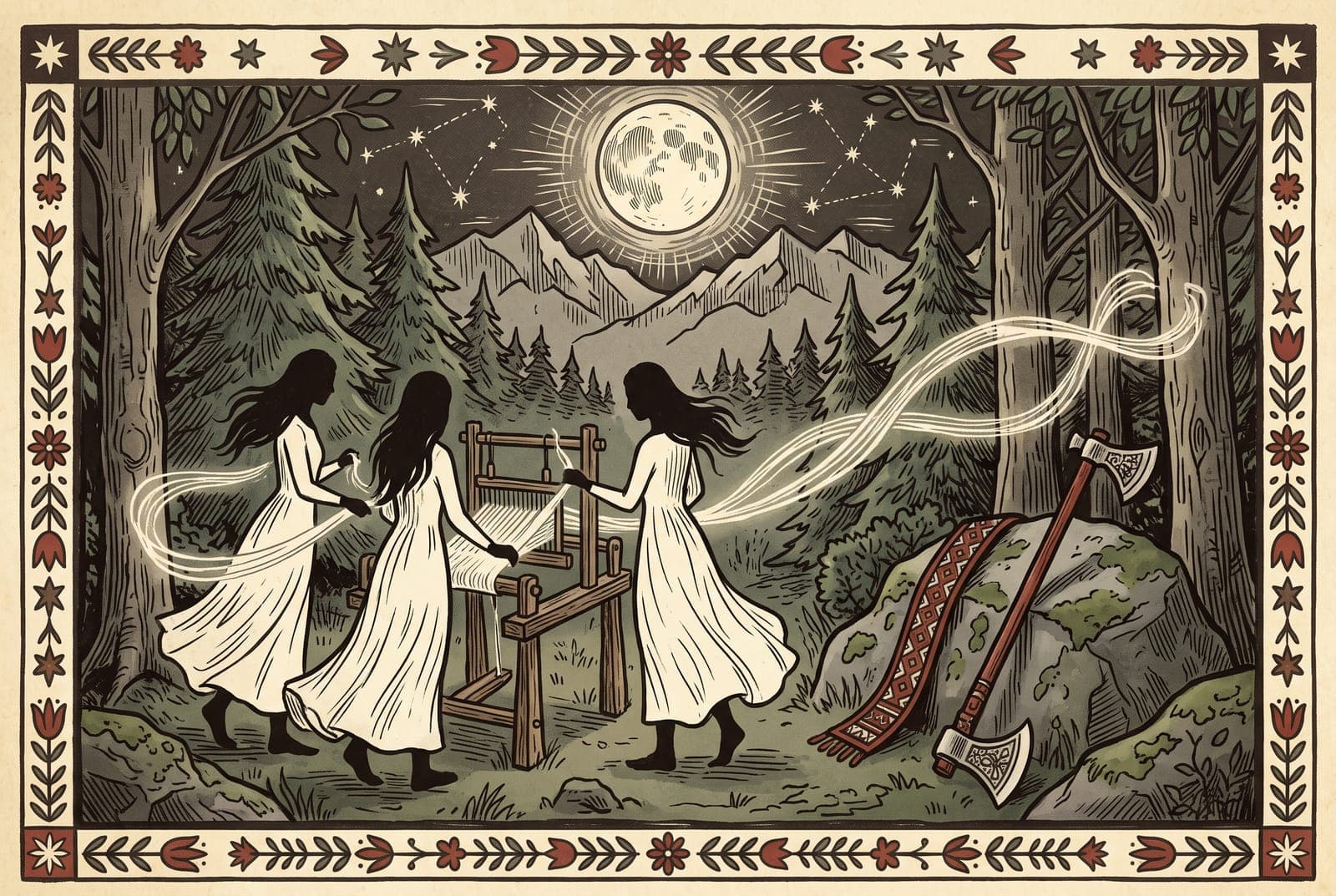
What the legend says. Supernatural beings – rusalky, fairies (víly), witches, old women, a talking snake, sometimes the devil – test the young Jánošík’s courage or kindness and then give him three things12: a shirt woven by rusalky that grants superhuman strength or invisibility; a belt with a magic herb or a “žilka” (cord) sewn into it that makes him invulnerable; and a valaška, the long-handled shepherd’s axe, that strikes by itself on command1. Hence the folk formula “rúbte mu do pása, tam je jeho spása” – “strike him at the belt, there lies his salvation”1.
Legend The magic gifts follow the logic of the folk tale: three donors, three objects, seven years at his mother’s breast, seven years of service to a witch, twelve men in the band12. In his “Staré pověsti české” (1894) Alois Jirásek has a forest fairy give Jánošík “a belt with a magic cord and a valaška” – with the strength of a hundred men6.
What the records say. Nothing. The court protocols know no magic belt, only a young man who answered questions under torture4. The valaška itself, though, is real: an everyday tool, walking staff and weapon of Carpathian shepherds. The legend charged an ordinary object with magic power.
Motif 3: The peas in the tavern
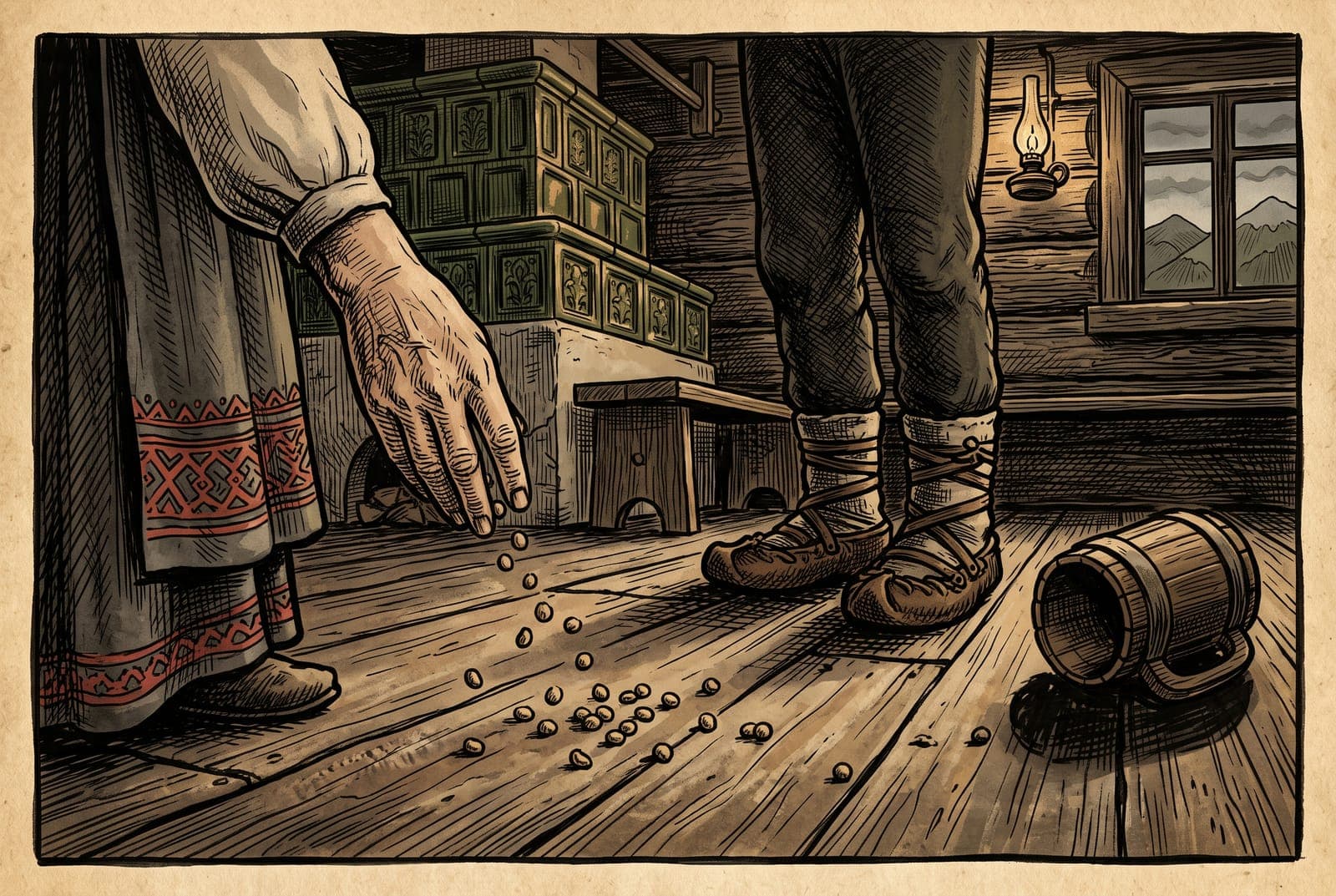
What the legend says. Jánošík is sitting in a tavern. An old woman (“stará baba”) scatters peas under his feet; he slips and is overpowered. In many versions this succeeds only after a sweetheart or a traitor has taken away his magic belt or hidden his valaška12.
When it first appears. Surprisingly early. The peas are already in the 18th-century song “Píseň o Jánošíkovi, zbojníkovi”, together with betrayal by his closest friend2. Záborský took the motif up, and Jirásek wrote in 1894: “Podsypali mu pod nohy hrachu” – “They strewed peas under his feet”16. In Martin Frič’s 1935 film the old woman laughs with glee as she does it2.
What the records say. Two arrests in Klenovec are documented. In the autumn of 1712 Jánošík and Uhorčík were seized there and held at Hrachovo, but were released; the legend turned this into an escape4. The second, decisive arrest came around the turn of 1712/1713 or in early March 171345. How it happened, the court records do not say. The historian Ivan Houdek already observed: “Ako a kde sa to stalo, o tom niet v súdnych spisoch ani zmienky, odkázaní sme v tom len na podanie” – “How and where it happened, the court records do not mention at all; we depend on tradition alone”1. One such tradition places the scene in Valaská Dubová1. The peas fill precisely this gap.
Motif 4: The hook, the dance and the last words
This is where legend and record come closest – which is exactly why they are worth separating carefully.
Documented The sentence of the Liptov county court of 17 March 1713 states that Jánošík is to be “na hák na levém boku prehnatý a tak na príklad jinších takových zločincov … zavesený” – “pierced with a hook through the left side and so hung up as an example to other such criminals”4. Whether it was carried out in exactly this way, and whether on 17 or 18 March, was not recorded4.
What the legend says. On the way to the gallows Jánošík smokes three pounds of tobacco, dances around the gallows several times (“obhajduchuje”) and refuses a pardon with the words “Keď ste si ma upiekli, tak si ma aj zjedzte!” – “Since you have roasted me, eat me too!”1. In Jirásek he dances around the gallows four times6. In Frič’s 1935 film Paľo Bielik, as Jánošík, dances a last dance and impales himself on the hook2. Popular retellings still say that he “jumped onto the hook”.
Legend The line about roasting and eating is a folk verse. Peter Račko documents it from the song anthology of Mišianik, Mináriková, Michalcová and Melicherčík (1958) and from Viera Gašparíková’s volume (1988)1. The leap onto the hook comes from film and popular retelling; it has no basis in the archives2.
What the records say. Besides the sentence, we know its legal basis. Hungarian customary law in Werbőczy’s “Tripartitum” prescribed the gallows for thieves and the stake or the wheel for robbers1. In Hungary the hook was a death penalty imposed on commoners4. About Jánošík’s final minutes the sources are silent: no record of the execution itself is known4.
Motif 5: The pardon that came too late
What the legend says. A messenger rushes in with a pardon – and arrives too late. Or Jánošík proudly refuses mercy, as in the mocking verse1.
When it first appears. As a dramatic device it is found, for example, in the Czech playwright Jiří Mahen’s tragedy “Jánošík” (1910): “milost přišla pozdě” – “the pardon came too late”2.
What the records say. The surviving records end with the sentence; no record of the execution is known, and scholars treat the belated pardon as a literary motif42. His court-appointed defender, Baltazár Palugyay, pleaded Jánošík’s youth and argued that he had killed or wounded no one4. That is the only documented struggle for his life.
Motif 6: The treasures
What the legend says. Folk tradition knows “Jánošíkove duby” (Jánošík’s oaks), “Jánošíkove poklady” (treasures) and a “Jánošíkova studňa” (well)2. In Jirásek he pours gold from the treetops into the hollow trunks of old trees6. Štefan Marko Daxner wrote “Poklad Jánošíkou” in 1845, and Ferko Urbánek the play “Jánošíkov poklad” in 19324. The gorges of Jánošíkove diery near Terchová also bear his name; people say he hid loot there – there is no evidence for it.
What the records say. Here lies a surprising grain of truth. The court wanted to know where the loot was hidden and ordered torture for that reason4. Jánošík named a vague hiding place: a beech beside a fir “with a cut-off arm” on the way from Jablonka to Klenovec4. What lay there, if anything, is unknown. Judging by the recorded loot – cloth, rings, a single thaler – it was hardly a hoard of gold45.
Motif 7: The twelve companions
What the legend says. Jánošík’s band numbers twelve. Ján Botto opens “Smrť Jánošíkova” with the famous lines: “Horí, ohník, horí, na Kráľovej holi, / ktože ho navatril? Dvanásti sokoli” – “A fire is burning on Kráľova hoľa, / who has kindled it? Twelve falcons”72. Names such as Ilčík, Uhorčík, Hunka, Surovec, Adamčík, Hrajnoha and Gajdošík recur in songs and tales; Gajdošík often plays the traitor12. In the folk tales the strongmen Valibuk, Valivrch and Lomidrevo join them1.
What the records say. Twelve is a fairy-tale number1. The testimonies of Jánošík and Uhorčík describe a loose, shifting group, including Turiak, called “Huncaga”, Plavčík of Dunajov and Jakub Chlastiak of Oščadnica; several members had already been executed at Cieszyn by the time of the trial4. Some of the “companions” in the songs can never have known him: Jakub Surovec was born only in 1715, two years after Jánošík’s death, and was executed at Brezno in 17408.
Other recurring motifs deserve a mention: the former theology student who tests students in Latin; the boy so strong that he lifts the corner of a cottage; and the saviour who will return when his people are at their lowest – Jirásek writes that he will come when things are worst for the Slovaks26.
How the legend grew: from outlaw song to national poetry
Songs and first prints in the 18th century
According to the Encyclopaedia Beliana, the tradition arose “relatively shortly after his death”3. Outlaw songs about Jánošík were probably sung as early as the first half or the middle of the 18th century12. The literary historian Ján Vilikovský found a manuscript with three semi-folk songs in the Tranoscius library in Liptovský Mikuláš: about Adam and Ilčík, about Jánošík, and about Jakub Surovec1.
Disputed The dating of this manuscript is disputed. Peter Račko places it at around 1761–1778 and thinks the Jánošík song may be older still1. The Slovak Wikipedia, also citing Vilikovský, dates the versions to the 1780s and 1790s4. All that is certain is that the song is older than its first printing in 1809.
In May 1785 the oldest known printed mention appeared: the anonymous anecdote “Znamenitá kázeň jednoho kazatele za dnů hlavního zbojníka Jánošíka” (“A remarkable sermon by a preacher in the days of the robber captain Jánošík”) in the Banská Bystrica newspaper “Staré noviny literního umění”14. In it, robbers waylay a preacher in Liptov; the text draws a parallel with Christ and with the betrayal by Judas1. Scholars attribute it to Augustín Doležal4.
Tablic, Šafárik and the first poets
In 1809 Bohuslav Tablic printed the song “Jánošík, loupežník liptovský” in the second volume of his “Slovenští veršovci”1. Šafárik followed in 18142. Not every poet glorified him: in “Slávy dcera” (1832) Ján Kollár placed Jánošík in hell, condemned to dance for ever to the bagpipes – a moralising counter-image2. In the same year Gašpar Fejérpataky-Belopotocký began, in his “Vlastenský kalendár”, the first detailed account based on the trial records4. In 1844 he certified a copy of the interrogation record that the young poet Janko Kráľ had helped to write out; it is now held by the Slovak National Museum in Martin4.
Romanticism and the Štúr generation
In the 1840s, as the generation around Ľudovít Štúr shaped the Slovak literary language and the national movement, the robber became a parable of freedom and, after 1848, a symbol of national liberation with messianic overtones12. Janko Kráľ wrote “Výlomky z Jánošíka” in 1844–1847, Samo Chalupka the poem “Jánošíkova naumka”, and Ján Botto “Pieseň Jánošíkova” in 184623.
The key work is Botto’s “Smrť Jánošíkova” (“The Death of Jánošík”), written in 1848–1858 and published in 1862 in the almanac “Lipa” – a romance consisting of an introduction and nine songs27. Botto deliberately drew on folk motifs, such as the belt at which one must strike to overcome Jánošík17. Since Botto, Jánošík in Slovak literature has been not merely a robber but a symbol.
At the same time Božena Němcová collected Jánošík material in Slovakia (1851–1855), Jirásek included the legend in his “Staré pověsti české” in 1894, and Mahen wrote his tragedy “Jánošík” in 19102. Drawing on Jozef Tkáčik (1929), Tomas Balkelis counts more than 15 poems, 10 prose works, 17 articles and studies, 3 paintings and at least 2 pieces of music about Jánošík in the 19th and early 20th centuries10.
The 20th century: every regime its own Jánošík
In 1921 “Jánošík” became the first Slovak feature film; more films, operas and musicals followed34. Politically, the figure was now claimed from all sides. The Slovak State (1939–1945) gave him rather modest space, as a symbol of the lowest classes; yet as late as November 1944 the regime fortnightly “Náš boj” used his image to call men into the Hlinka Guard emergency units1. On the other side, “Jánošík groups” (jánošíkovské družiny) formed from 1942; the underground magazine “Jánošík” appeared from December 1943 to July 1944; and from August 1944 to February 1945 a partisan brigade under Ernest Bielik fought in his name1.
After 1945 the communist regime recast him as a “hero of the anti-feudal resistance” – the very title of Andrej Melicherčík’s book “Juraj Jánošík, hrdina protifeudálneho odboja slovenského ľudu” (1956; 2nd edition 1963)1. A history textbook of 1954 called the robbers “avengers of the enslaved people”1. Ján Cikker’s opera “Juro Jánošík” was deliberately shaped to the expectations of socialist realism: the censors approved the libretto on 5 March 1953, and the premiere took place on 10 November 1954, marking the anniversary of the October Revolution1. From the 1960s the ideological charge faded; according to Hruboň and Krištofík, the musical “Na skle maľované” no longer had any real propaganda effect1.
The “social bandit”: Jánošík in Hobsbawm
Jánošík reached an international audience through the British historian Eric Hobsbawm. Hobsbawm coined the term “social bandit” in “Primitive Rebels” (1959) and developed it in “Bandits” (1969)9. He distinguishes the noble robber, the avenger and the haiduk; for him Jánošík, alongside Robin Hood and the Andalusian Diego Corrientes, is a model noble robber9. His line on the subject is much quoted:
“Nobody who is insignificant has several hundred songs made about him, like Janošik.” (Hobsbawm, “Bandits”, 1969, p. 114)10
Hobsbawm’s model describes how people see their robbers: as the victim of an injustice, as someone who rights wrongs, takes from the rich, kills only in self-defence and in the end falls through betrayal9. It does not claim that every robber was like this. Nor is the model uncontested; criticism came from Anton Blok (1972), among others10. Applied to Jánošík, the model fits the legend exactly – and for that very reason not the man in the records. The “several hundred songs”, incidentally, is a rhetorical figure; no reliable total exists10.
Jánošík and his brothers: outlaw legends across Europe
| Figure | Region | Dates | Parallel with Jánošík |
|---|---|---|---|
| Robin Hood | England | legendary; first mentioned in “Piers Plowman”, 1370s11 | archetype of the robber who takes from the rich |
| Ondráš z Janovic | Silesia/Moravia | 1680 – 1 April 171512 | killed with a valaška by a member of his own band; legend and documents diverge in a similar way |
| Oleksa Dovbush | Carpathians (today Ukraine) | 1700 – 24 August 174513 | leader of the opryshky, folk hero of the Carpathians |
| Schinderhannes (Johannes Bückler) | Rhineland | c. 1778 – 21 November 180314 | German myth of the “noble robber” |
Robin Hood is the oldest of the group and purely legendary; as early as the 1370s “Piers Plowman” speaks of “rhymes of Robin Hood”11. Ondráš, a Silesian contemporary of Jánošík, died in 1715 by the valaška of one of his own companions12. A generation later Oleksa Dovbush led the opryshky in the eastern Carpathians13. From the German-speaking world comes the Schinderhannes, executed in 1803, whose image was likewise transformed into that of a noble robber14. A Slovak conference volume also lists Fra Diavolo, Cartouche, Babinský, Nikola Šuhaj, Pintea and Sándor Rózsa as kindred “people’s robbers”1.
Why the legend is cultural heritage
Setting the legend beside the records does not break its spell. The records show a young man from Terchová who robbed for two years and was tortured and cruelly executed4. The legend shows what generations of shepherds, poets and readers wanted him to be: just, unconquerable, free even beneath the gallows. Both are true – each in its own way. The historical Jánošík belongs in the State Archive at Bytča, the legendary one in the songs of Terchová. This article simply tries not to confuse the two.
Frequently asked questions
Did Jánošík really rob the rich to give to the poor?
There is no evidence for it in the court records. The band took mainly cloth, small sums of money, rings, weapons and food; the only documented gift is rings he gave to girls in Terchová45. The benefactor motif clearly appears only in songs and poems from 1809 onwards12.
Is the story of the peas true?
The peas that an old woman scatters under his feet in a tavern are a motif of an 18th-century folk song2. How and where Jánošík was actually arrested, the court records do not say; most of the literature names Klenovec14.
Was Jánošík really hung on a hook?
The sentence of 17 March 1713 ordered him to be hung on a hook through the left side4. No record of the execution itself is known, so it is also unclear whether it took place on 17 or 18 March4. The dance and the leap onto the hook are legend12.
What does “Keď ste si ma upiekli, tak si ma aj zjedzte” mean?
It means “Since you have roasted me, eat me too!”. The line comes from a folk verse in which Jánošík refuses a pardon at the gallows; these last words are not historically documented1.
How old is the Jánošík legend?
Songs about him were probably sung in the 18th century, and a manuscript containing a Jánošík song is dated to around 1761–17781. The oldest printed mention appeared in Banská Bystrica in May 178514. The Romantics made him a national symbol, above all Ján Botto with “Smrť Jánošíkova” (1862)27.
Sources
- Zbojníctvo na Slovensku. Zborník z vedeckej konferencie (mit Beiträgen von P. Račko, P. Vítek, I. Mrva, A. Hruboň/J. Krištofík u. a.) – Nemec, M. – Vítek, P. (eds.), Spolok Slovákov v Poľsku (2014) [sk]
- Jánošíkovská legenda na Slovensku (Bachelorarbeit) – Hrajnohová, Jana – Univerzita Karlova, Praha (2010) [cs]
- jánošíkovská tradícia – Encyclopaedia Beliana, Encyklopedický ústav SAV (2013) [sk]
- Juraj Jánošík – Wikipédia (sk) (2026) [sk]
- Hrdina alebo zlodej? Jánošík lup chudobe nerozdával, tvrdia historici – noviny.sk (2018) [sk]
- O Janošíkovi (Staré pověsti české) – Jirásek, Alois – Wikizdroje (1894) [cs]
- Smrť Jánošíkova – Botto, Ján – Wikizdroje (1862) [sk]
- Jakub Surovec – Wikipédia (sk) (2026) [sk]
- Bandits (book) – Wikipedia (en) (2026)
- Social Banditry and Nation-Making: The Myth of a Lithuanian Robber – Balkelis, Tomas – Past & Present 198 (2008)
- Robin Hood – Wikipedia (en) (2026)
- Ondráš z Janovic – Wikipedie (cs) (2026) [cs]
- Oleksa Dovbush – Wikipedia (en) (2026)
- Schinderhannes – Wikipedia (en) (2026)
Transparency notice (Art. 50 EU AI Act): research and text were produced with the help of an AI language model and editorially checked against the sources listed. Illustrations are AI-generated and are not historical depictions.
This article is also available in Deutsch, Slovenčina
More on Janosik.de
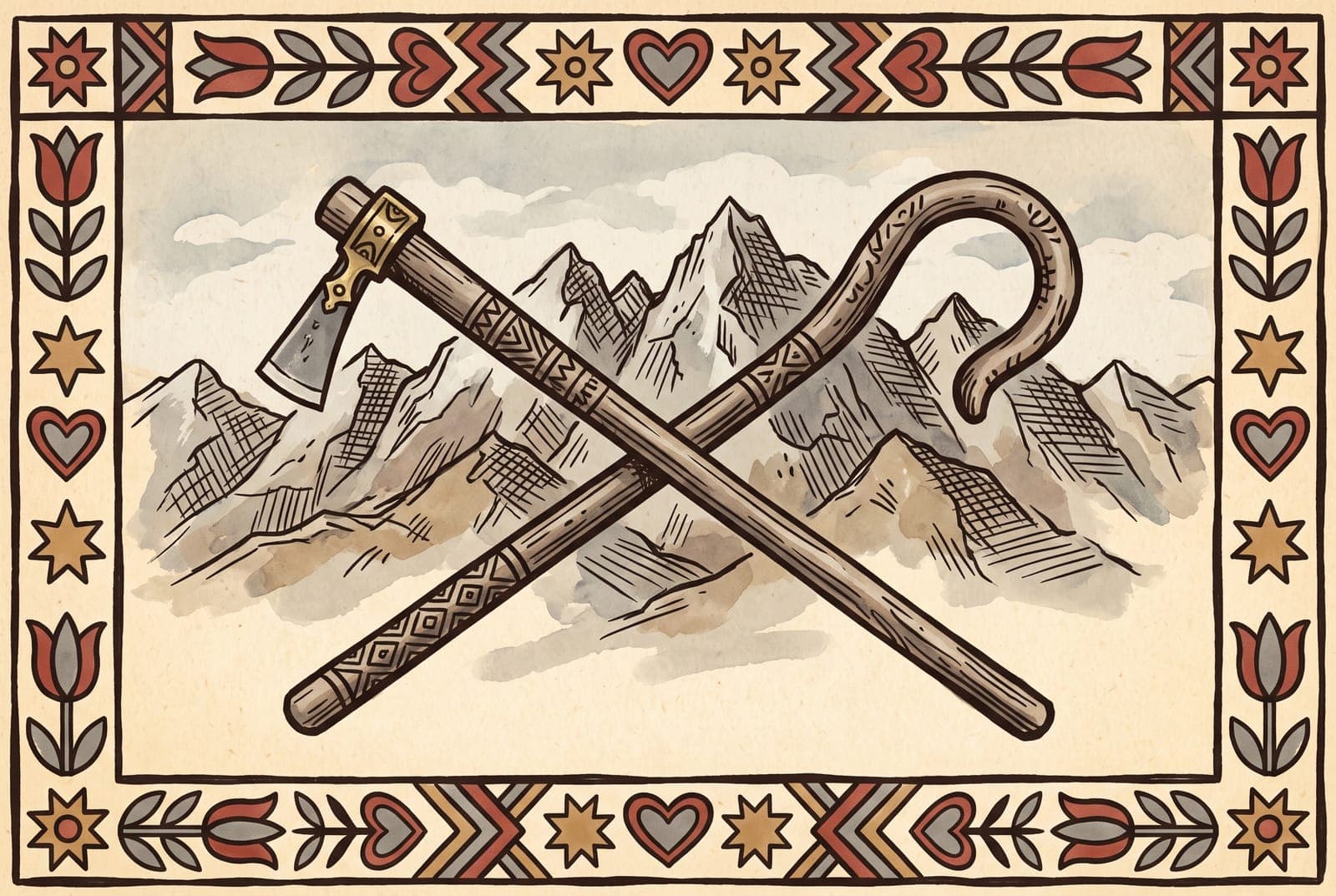
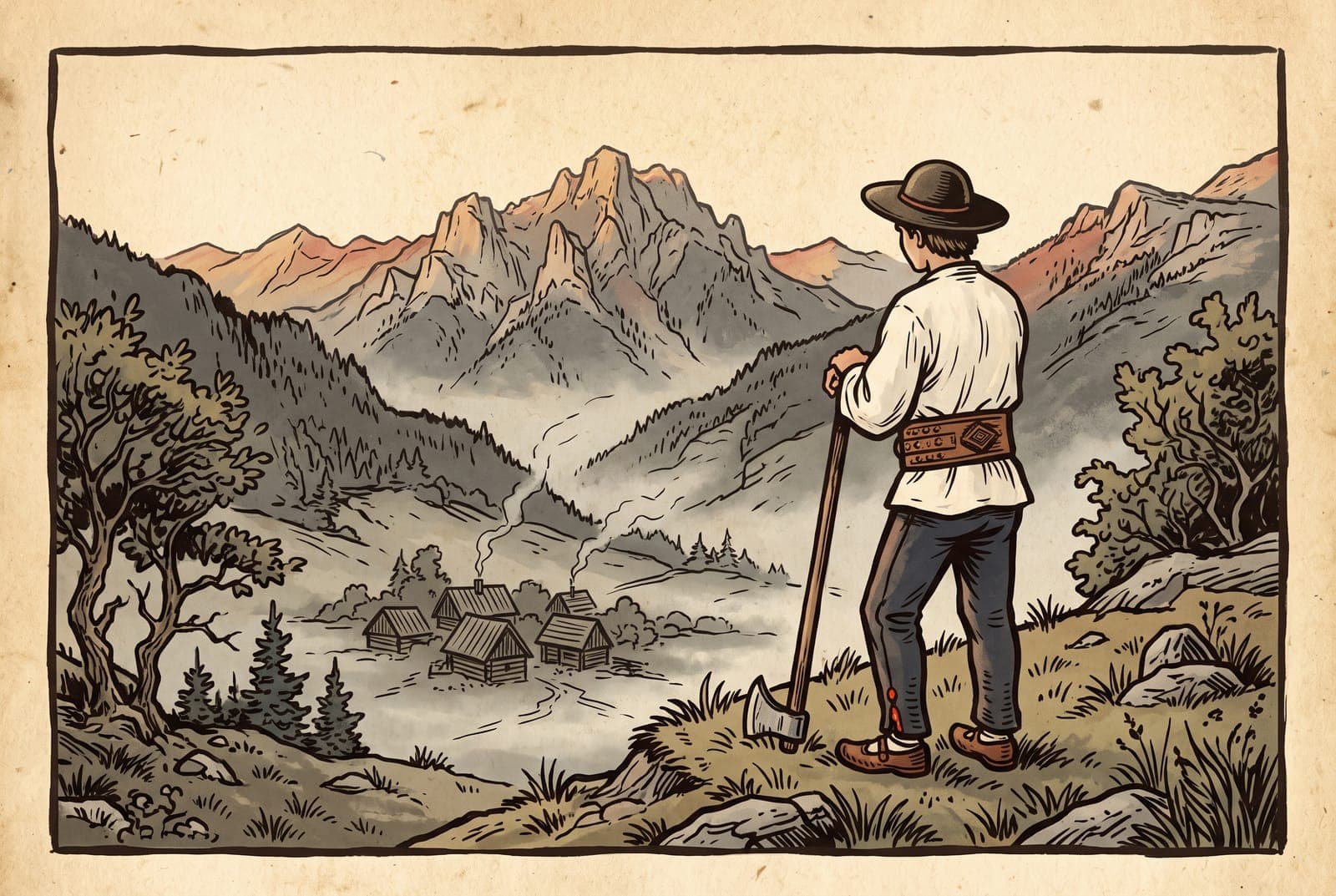
Valaška: the shepherd's axe that became Jánošík's emblem
A long shaft, a small blade: the valaška went with Carpathian shepherds from the time of the Wallachian colonisation. Only the legend turned it into Jánošík's magic axe.
Juraj Jánošík: Life, Trial and Legend of Slovakia's National Hero
A serf's son from Terchová, a soldier in two armies, an outlaw captain for little more than a year – and, after his execution in 1713, Slovakia's most famous hero. What the records really say about Juraj Jánošík.
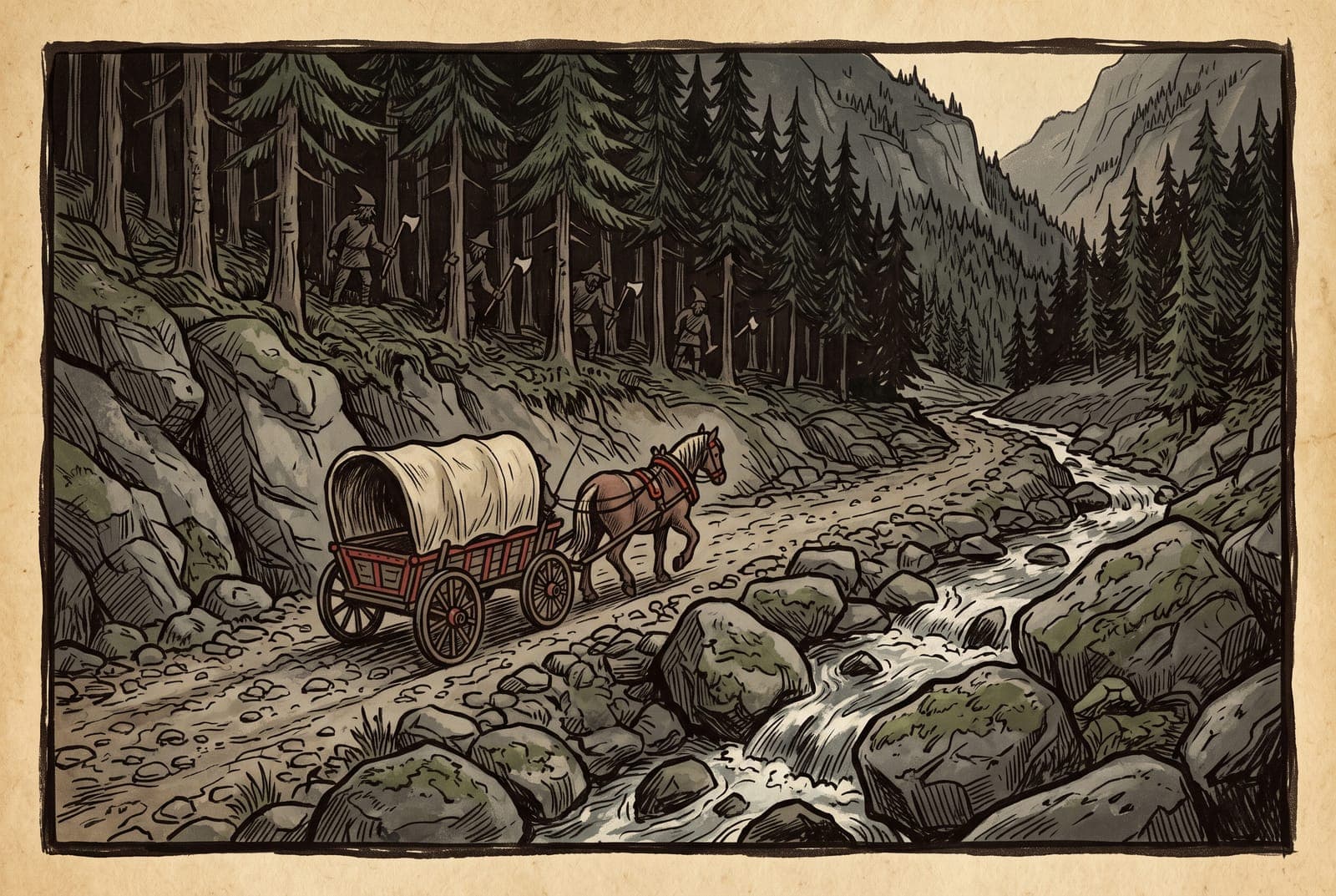
Zbojníctvo: Carpathian outlaw bands of the 17th and 18th centuries
In the 17th and 18th centuries bands of shepherds and farmhands roamed the forests and passes of the Carpathians. Court records show how they lived, shared their loot and died – and how little of it resembles the legend.